A new child care setting brings unfamiliar people, sounds, rooms, and rhythms all at once. A few predictable anchors can make that change easier to understand. In the days before the first visit, talk simply about what will happen: a grown-up will bring the child, teachers will be there, and the grown-up will return.
Preparing for the First Weeks of Child Care in Perkasie
Family Guides
Start with a few familiar anchors
If the program permits a comfort item or family photo, choose it together. Ask in advance what should be packed, what needs a name label, and what must stay at home. Knowing those details prevents a rushed first morning.
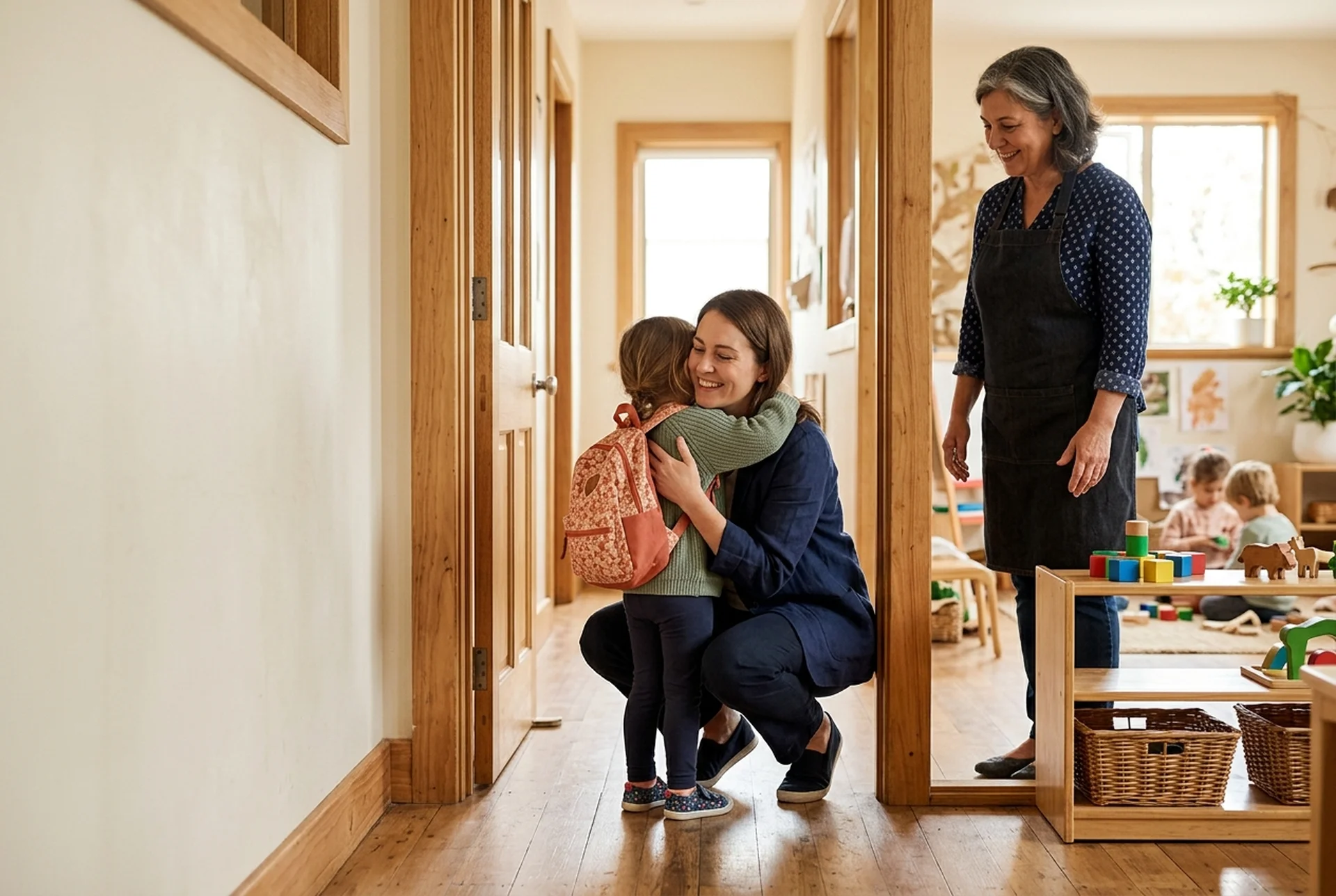
Keep the goodbye warm and clear
Long, uncertain goodbyes can make separation harder. A short ritual—a hug, one reassuring sentence, and a confident handoff—gives the child a sequence they can begin to recognize. Avoid disappearing without saying goodbye, even when leaving quietly seems easier in the moment.
Tears at separation do not automatically mean the placement is a poor fit. They are one way young children express a major transition. Ask the program how it handles difficult drop-offs and when families can expect an update.
Expect adjustment to be uneven
Some children separate easily at first and react later; others need time before each goodbye becomes familiar. Progress is rarely a straight line. Look for patterns across several days instead of judging the experience from one difficult morning or one tired evening.
At pickup, reconnect before asking many questions. A snack, a cuddle, or quiet time may help more than an immediate review of the day. When concerns persist, bring specific observations to the program and ask what staff are seeing. Shared, concrete information is more useful than guessing from either side.
Expect naps and appetite to wobble at first
Many children eat less, nap differently, or come home unusually tired during the first weeks. A group setting asks a lot of a young child: new sounds, new people, and a new rhythm all take energy. These shifts almost always settle as the routine becomes familiar, and they are worth mentioning to teachers rather than worrying over alone.
Keeping home routines steady helps more than compensating. A familiar dinner, an earlier bedtime during the adjustment weeks, and the usual weekend rhythm give the child a stable base while so much else is new. Big changes at home — dropping a nap, starting toilet learning, moving to a new bed — are usually easier a few weeks after care begins, not during the transition itself.
Give the first month a rhythm at home
Talking about the day in small, concrete ways builds the bridge between home and care. Naming the teacher, a friend, or something the child played with makes the new place part of family conversation. Photos of the classroom or a walk past the building on a day off can make Monday feel less abrupt.
Evenings matter as much as mornings in the first month. A child who has held it together all day may fall apart at home — that release is common and usually a sign of trust, not of a bad day. A calm reconnection at pickup, a little unhurried time together, and a predictable evening help the whole family absorb the change.
Know what settling in usually looks like — and when to ask
For most children the arc is uneven but forward: harder days early in the week, easier ones by the end; tears at goodbye that shorten from minutes to moments; first mentions of a teacher or friend by name. Many children settle within a few weeks, and some need longer — both are within the range of normal.
If drop-offs are still intensely distressing after several weeks, or a child seems withdrawn at home, raise it with the teachers rather than waiting. Ask what they see in the ten minutes after goodbye and through the day. Families and educators each see half of the picture, and most settling-in worries resolve fastest when both halves are put together.